
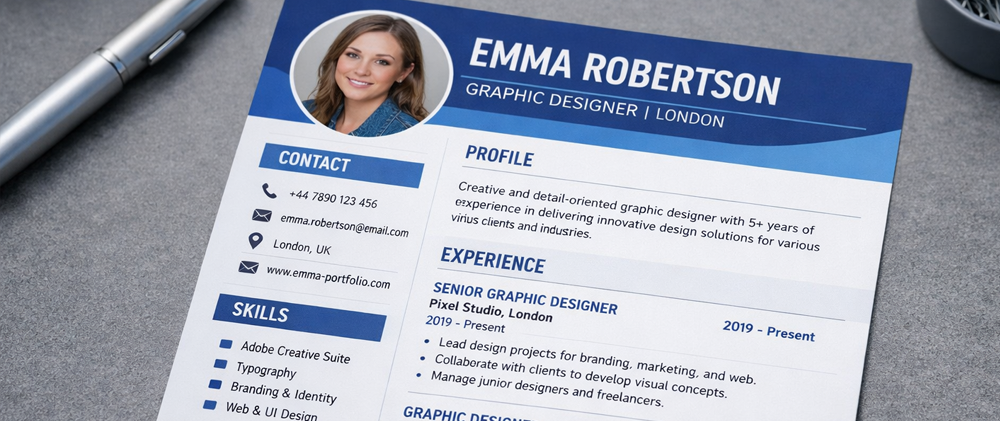
Writing a CV can feel overwhelming, especially the first time. Getting it right is essential if you want to stand out and capture a recruiter’s attention within those first few seconds. Most recruiters simply don’t have the time to read every CV in detail, so your goal is to make their job easier while presenting your value clearly and confidently.
A strong CV should communicate not just what you’ve done, but how well you’ve done it and why it matters. It’s about showing your impact, design thinking, and your relevance to the role. The following tips will help you shape a CV that is both professional and purposeful, while still reflecting you as a designer.
1. Start with a strong summary or personal statement
Do: Write a short, focused introduction that highlights your experience, strengths, and why you’re a strong candidate for the role.
Don’t: Use vague or generic statements that don’t add real value.
2. Don’t list irrelevant positions
Do: Ensure your CV tells a clear and coherent career story. Each role should contribute to a logical progression or support your current goals.
Don’t: Include unrelated or outdated roles that don’t add value to the position you’re applying for.
Your CV should have a clear thread running through it, helping the reader quickly understand your journey, direction, and relevance.
3. Optimise the first words for impact
Do: Start each line of your summary or personal statement with strong, relevant keywords that immediately capture attention.
Don’t: Bury important information in the middle of sentences.
Recruiters often scan quickly, so the first words on the left-hand side are the most likely to be noticed at a glance.
4. Keep it visually clean and intentional
Do: Use a simple, well-structured layout with strong hierarchy and spacing.
Don’t: Overdesign it with excessive colours, effects, or gimmicks.
5. Treat your CV as a design project
Do: Show your design thinking through typography, grid, and consistency.
Don’t: Use generic templates without adapting them to your personal style.
6. Prioritise readability
Do: Use legible fonts, clear headings, and logical sections.
Don’t: Sacrifice clarity for creativity (e.g. tiny text, low contrast).
7. Focus on impact, not just tasks
Do: Describe achievements and results (e.g. increased engagement).
Don’t: Just list responsibilities like a job description.
8. Tailor it to the role
Do: Adapt your CV for each job, emphasising relevant skills and experience.
Don’t: Send the same generic CV everywhere.
9. Highlight key tools and skills
Do: Clearly list relevant tools (e.g. Adobe CC) and core skills.
Don’t: Overload with every tool you’ve ever touched.
10. Include a strong portfolio link
Do: Make your portfolio easy to find and access.
Don’t: Assume your CV alone is enough for a design role.
11. Keep it concise
Do: Aim for a maximum 2 pages, focusing on what matters most.
Don’t: Include irrelevant experience or long paragraphs.
12. Proofread and refine
Do: Check spelling, grammar, and alignment details carefully.
Don’t: Submit a CV with errors. It reflects poorly on your attention to detail.